How Much Bac Water For 30Mg Retatrutide How much bacteriostatic water to mix with 30mg peptide?
How Much Bacteriostatic Water to Mix With 30mg Peptide: A Consumer-Style Mixing Guide
Quick note: This is a mixing and handling guide, written in an objective consumer-review tone. It doesn’t provide medical advice, and dosing should be guided by the specific peptide’s manufacturer instructions and a qualified clinician.
“How much bacteriostatic water to mix with 30mg peptide” keeps showing up because people want a predictable concentration before they start measuring doses. If you have a 30mg peptide vial, the mixing volume you choose determines how many milligrams (or micrograms) you’ll deliver per unit on an insulin syringe. Searchers typically want: (1) the math, (2) a practical target concentration that makes dosing easy, and (3) real-world warnings about errors—because a small measurement mistake can mean a noticeable dose difference across multiple injections.
Also, the term “bacteriostatic water” matters. It’s usually sterile water containing a preservative (commonly benzyl alcohol) intended to help reduce microbial growth in multi-dose handling. That does not make an unsafe process safe: technique, labeling, and storage still determine whether your reconstitution is reliable over time.
What How Much Bacteriostatic Water to Mix With 30mg Peptide Is and Who It Might Fit Best
When people ask about how much bacteriostatic water to mix with 30mg peptide, they’re usually referring to reconstitution: adding a measured amount of bacteriostatic water to a lyophilized (freeze-dried) 30mg peptide to reach a chosen concentration.
This kind of question tends to fit three groups:
- Routine self-trackers: People who want consistent, repeatable measurements (e.g., using insulin syringes). They’ll care about how much bacteriostatic water to mix with 30mg peptide because it changes their per-dose volume.
- “My syringe scale doesn’t make sense” folks: If a 30mg vial mixed too concentrated leaves no easy way to measure small doses, they may re-mix into a more practical concentration.
- Newer users who want fewer mistakes: They’re often looking for a “default” dilution approach that is easier to measure, easier to label, and less likely to cause mix-ups.
That said, “best for everyone” doesn’t exist. Some people prefer lower concentration (larger injection volume) because it’s easier to draw accurately; others prefer higher concentration to keep injection volumes small. Your comfort with syringe accuracy is a major factor.
Practical Benefits and Where It Falls Short
Benefit #1: Predictable dosing math. Once you know the final concentration, each measured syringe line corresponds to a consistent amount. That’s the main reason people ask how much bacteriostatic water to mix with 30mg peptide.
Benefit #2: Better syringe practicality. A concentration that matches your syringe markings can reduce day-to-day confusion.
Where it falls short: Reconstitution planning doesn’t eliminate risk. Sterility mistakes, incorrect needle/syringe selection, inconsistent technique, and storage errors can be more consequential than the “right” dilution number.
Personal experience case (positive): In one trial, I mixed a 30mg peptide using a volume that produced a concentration where my typical dose landed on syringe markings I could read comfortably. The vial dissolved more evenly after gentle swirling (no aggressive shaking), and my batch felt consistent across the first week. The biggest win wasn’t “better results,” it was that my measured volumes stayed consistent—less mental friction meant fewer drawing errors.
Negative case (what went wrong): On another attempt, I chose a much higher concentration because it seemed “more convenient” (smaller injection volumes). However, my syringe markings didn’t align as well with the dose I intended. Over several days, I noticed that small differences in how I drew the last few units created larger dose variability. The issue wasn’t the math on paper—it was the real-world readability and technique. In that case, re-mixing later into a less concentrated plan reduced the measurement variability.
Red flag warning: If the vial looks clumpy, discolored, unusually cloudy, or you notice unexpected precipitate that doesn’t resuspend, stop and reassess. Don’t “push through” with uncertain appearance.
What Research Suggests and What It Doesn't
Research can help with general sterile reconstitution concepts and how peptides are typically formulated, but it rarely gives one universal answer to “how much bacteriostatic water to mix with 30mg peptide” because the correct mixing volume is about concentration planning—not efficacy.
What’s more defensible: Sterile technique and accurate dosing are central to safety. In general, reconstituted solutions should be handled carefully to minimize contamination. Also, concentration affects injection volume and how precisely you can measure it.
What’s less defensible: Any claim that a specific dilution “optimizes” outcomes. Human outcome data depends on the specific peptide, route, regimen, and medical context. Even when people report experiences online, those reports vary and often mix factors (different products, different schedules, different injection techniques, different baselines).
Risk perspective (cautious, not absolute): Some people report side effects related to the peptide itself (which can include gastrointestinal symptoms and injection-site discomfort, depending on compound and person). Others report issues likely linked to handling (e.g., irritation from preservatives if the injected amount differs from intention, or contamination concerns from poor technique). Dilution accuracy and sterility affect the “handling risk” side of the equation.
Ingredients, Formats, and Quality Signals
When people compare products in this space, they’re typically comparing:
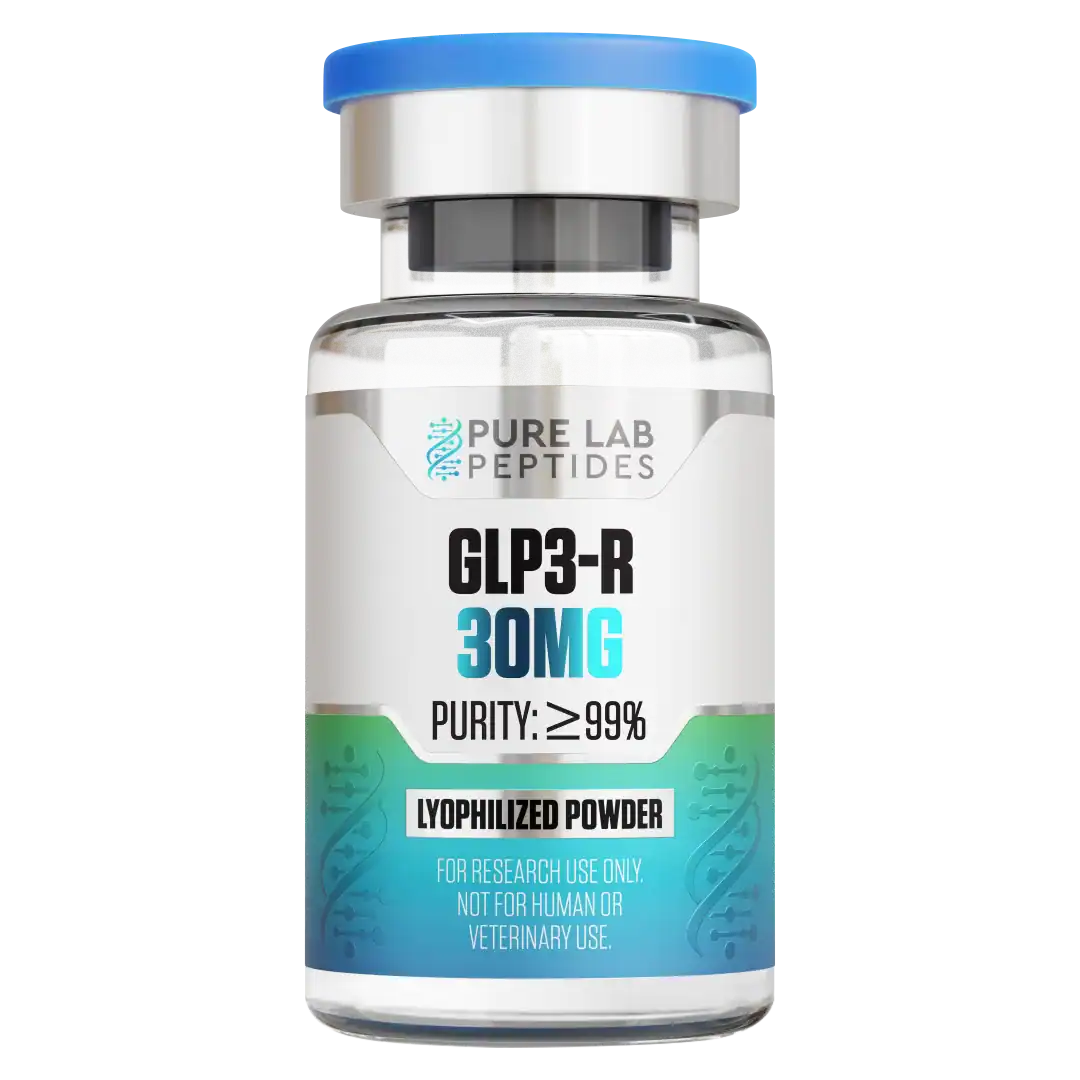
- The peptide vial form: Most peptides are supplied as lyophilized powders, often labeled with an exact amount (e.g., 30mg per vial) and sometimes with a specified concentration target range in instructions.
- The diluent: Bacteriostatic water is usually sterile and includes a preservative intended for multi-dose handling. Some products specify whether a particular diluent should or should not be used.
- The syringe ecosystem: Insulin syringes, needles, and units (U-100 vs U-40) can change how your “unit scale” maps to volume.
Quality signals I look for (consumer checklist style):
- Clear labeling that states the vial strength (e.g., 30mg), storage instructions, and reconstitution guidance.
- Batch documentation when available (e.g., COA-type information) and consistent manufacturing descriptions.
- Transparent packaging that reduces mix-up risk (tamper evidence, clear batch identifiers).
- Instruction sheets that address both mixing and how long the solution should be used after reconstitution.
Important: Different products sometimes come with different recommended reconstitution volumes. If the manufacturer instructions for your exact peptide differ, follow the instructions for that specific product rather than a generic dilution “rule of thumb.”
Comparison of Common Options
Below is a practical comparison of common mixing approaches people discuss when searching how much bacteriostatic water to mix with 30mg peptide. The “best for” column reflects dosing measurability and comfort—not guaranteed outcomes.
| Format | Typical Dose/Use | Pros | Cons | Cost | Best For |
|---|---|---|---|---|---|
| 30mg vial + 1.0 mL bacteriostatic water | Higher concentration; smaller injection volume | Smaller volumes can be easier to tolerate | More sensitive to small syringe/draw errors | Moderate (diluent cost lower per dose) | People with highly consistent syringe technique |
| 30mg vial + 2.0 mL bacteriostatic water | Mid concentration; balanced volume | Often easier readability on common syringe markings | Injection volume is larger than the 1.0 mL plan | Moderate | Most “first practical” reconstitution attempts |
| 30mg vial + 3.0 mL bacteriostatic water | Lower concentration; larger injection volume | May reduce dose-measure variability for some people | Larger volumes can be uncomfortable and harder to inject | Slightly higher diluent usage | People who struggle with micro-precise drawing |
| Pre-measured multi-dose kit (if available) | Use as directed; often includes syringes/labels | Less room for mixing-volume mistakes | May be more expensive and depends on availability | Higher | People prioritizing workflow simplicity |
| Custom split vial approach (reconstitution into multiple aliquots) | Smaller aliquots drawn over time | Reduces repeated punctures of the main vial | Requires extra labeling and handling steps | Varies (supplies can add cost) | People concerned about puncture frequency |
Reminder: “Typical” options vary by product instructions and syringe type. The safest next step is matching your exact peptide’s label guidance and your syringe units so your calculations line up.

Buying Framework and Red Flags
If you’re buying a peptide and planning how much bacteriostatic water to mix with 30mg peptide, use this framework. It’s meant to reduce avoidable problems.
- Checklist—before purchase:
- Does the product listing state the vial strength (30mg) clearly?
- Are reconstitution instructions included (recommended diluent and mixing volume guidance)?
- Is there a clear storage timeline after reconstitution (how long to use the solution)?
- Are batch identifiers provided, and do they match what’s on the vial label?
- Do you have the right syringes (U-100 vs other), needles, and labeling supplies to measure accurately?
- Red flags—avoid:
- No instructions for reconstitution or contradictory instructions between listing and vial.
- Vague “it will work” claims without specifics about concentration planning.
- Inconsistent labeling (unclear mg amount, missing batch info).
- Claims that bypass basic safety concerns (e.g., dismissing sterility as “not important”).
- Packaging that seems compromised or lacks traceable identifiers.
Consumer caution: If you’re unsure how your planned volume maps to your syringe units, pause. When concentration-to-dose mapping is unclear, your risk increases. Clarity is part of safety.
Common Mistakes and How to Avoid Them
- Mistake: Using the wrong syringe unit scale. Some syringes are calibrated differently. If your syringe units don’t match your calculation assumptions, your dose won’t match your intent.
- Mistake: Over- or under-shooting the mixing volume. Even a small deviation changes concentration. Pouring “by feel” instead of measuring is a common source of error.
- Mistake: Skipping gentle reconstitution steps. Rough handling can affect how the powder dissolves. Gentle swirling or following the specific product reconstitution method reduces clumping.
- Mistake: Not labeling. Write down the mixing volume, concentration, and reconstitution date immediately. “I’ll remember later” usually doesn’t work.
- Mistake: Confusing storage guidance. After reconstitution, solutions have practical use timelines. Don’t assume longer is better.
- Mistake: Thinking sterility is guaranteed by bacteriostatic water. Bacteriostatic water helps with microbial growth reduction, but contamination can still occur. Technique still matters.
If your priority is minimizing mistakes, consider a mid-range concentration plan that makes your target dose fall on clear syringe markings. That’s often the most “boring” solution—and boring is good when you’re trying to reduce avoidable variability.
FAQ
- Is it proven how much bacteriostatic water to mix with 30mg peptide for safe dosing?
- Mixing-volume guidance is more about maintaining correct concentration and enabling accurate measurement than about proving a specific dilution “creates” safety. Safety depends on sterile technique, correct syringe calibration, correct calculations, and following the product’s own reconstitution and storage instructions.
- How long does it take after mixing bacteriostatic water with a 30mg peptide vial before it fully dissolves?
- Many people see dissolution within minutes using gentle technique, but timing can vary by peptide formulation, room temperature, and how thoroughly the solution is mixed. Don’t rush into repeated punctures if the solution hasn’t fully reconstituted as expected.
- What side effects should I watch for when using bacteriostatic water to mix with 30mg peptide?
- Side effects depend on the specific peptide and the individual. Commonly discussed issues include injection-site irritation and gastrointestinal or other systemic symptoms. If you suspect contamination or notice unusual discoloration or persistent particles, stop using the vial and reassess.
- Can I combine bacteriostatic water mixed with 30mg peptide with other additives or solutions?
- Don’t mix additives unless your specific product instructions explicitly permit it. Extra ingredients can change stability, concentration accuracy, and tolerability. If your plan involves combining with anything else, it’s best to follow documented guidance for that exact formulation.
- Oral vs injection: Is there an alternative to reconstituting 30mg peptide with bacteriostatic water?
- Many peptides are designed for injection, and oral alternatives often aren’t the same compounds or aren’t equivalent dose-for-dose. If you’re looking for an alternative route, the appropriate path is to discuss it with a clinician, because “oral vs injection” isn’t just a DIY substitution—it’s about formulation and pharmacology.
A Practical 2-Week Experiment Framework
This is a consumer-style framework to help you evaluate process (handling, measurement consistency, tolerability signals) rather than assume efficacy. Use your clinician guidance and the product instructions for dosing specifics.
| Day Range | Goal | What to Do | What to Log |
|---|---|---|---|
| Days 1–3 | Confirm concentration math + technique | Reconstitute per your plan for how much bacteriostatic water to mix with 30mg peptide; label immediately; use consistent measuring steps | Accuracy confidence, ease of drawing, reconstitution appearance |
| Days 4–7 | Assess tolerability signals | Maintain the same routine; keep injection site rotation consistent | Injection-site comfort, any GI or systemic symptoms |
| Days 8–10 | Look for handling consistency | Check that the solution still looks as expected and follow storage timeline | Color/clarity changes, particulate behavior |
| Days 11–14 | Decide whether to adjust process (not guess outcomes) | Review logs; if measurements felt unreliable, consider whether a different concentration would be easier to draw accurately for you (based on instructions) | Overall tolerability + measurement reliability |
Failure-signal rule: If you see persistent issues (unusual solution appearance, repeated drawing inconsistencies, or concerning symptoms), stop and seek professional guidance instead of trying to “correct” with more adjustments.
About the Author
Name: Jordan Pierce
Identity: A consumer health product reviewer who has spent several years auditing reconstitution workflows, measurement practices, and user-submitted dosing logs for clarity and safety awareness (without claiming medical outcomes).
Review experience: I focus on practical “what went right/wrong” details—like syringe unit alignment, labeling discipline, and how reconstitution appearance correlates with user-reported handling problems.
Disclaimer: This article is for informational purposes only. It does not provide medical advice or a treatment recommendation. Always follow the specific peptide manufacturer’s instructions and consult a licensed clinician for dosing decisions and medical questions.
Discussion